
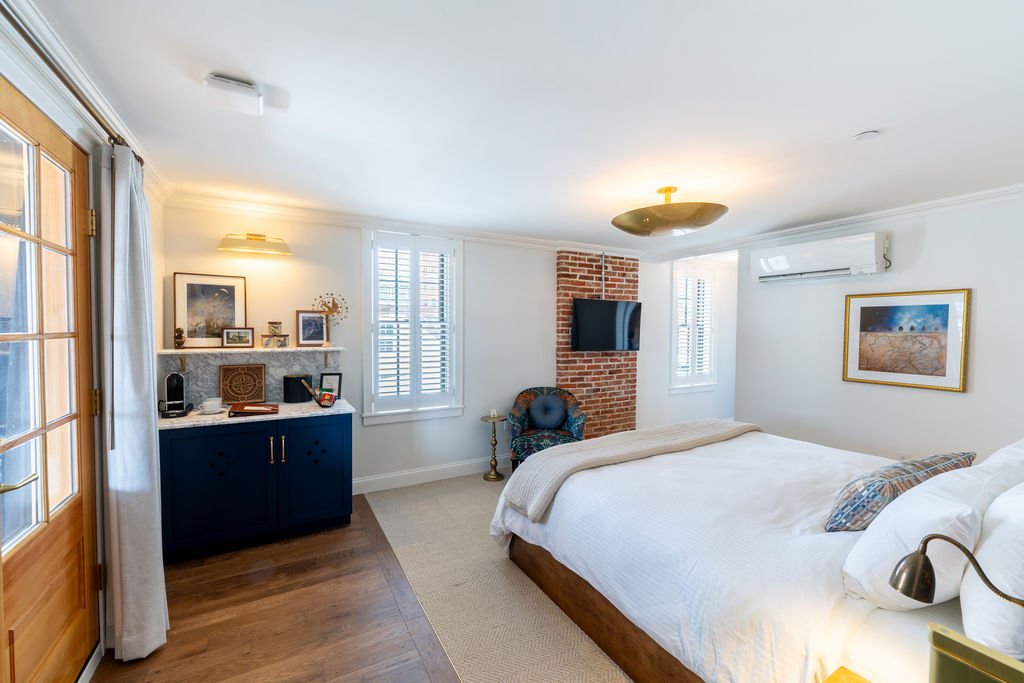
The Abolitionist
The Abolitionist guest room echoes of the bravery of freedom seekers and the people who actively opposed slavery and worked to end it. The Underground Railroad has a rich history in Kennett Square and surrounding regions, prompting reflection today on the nature of radical hospitality and activism. Under the cover of night, a network of abolitionists risked their lives, freedom, and livelihoods to fight for the liberation of enslaved people.
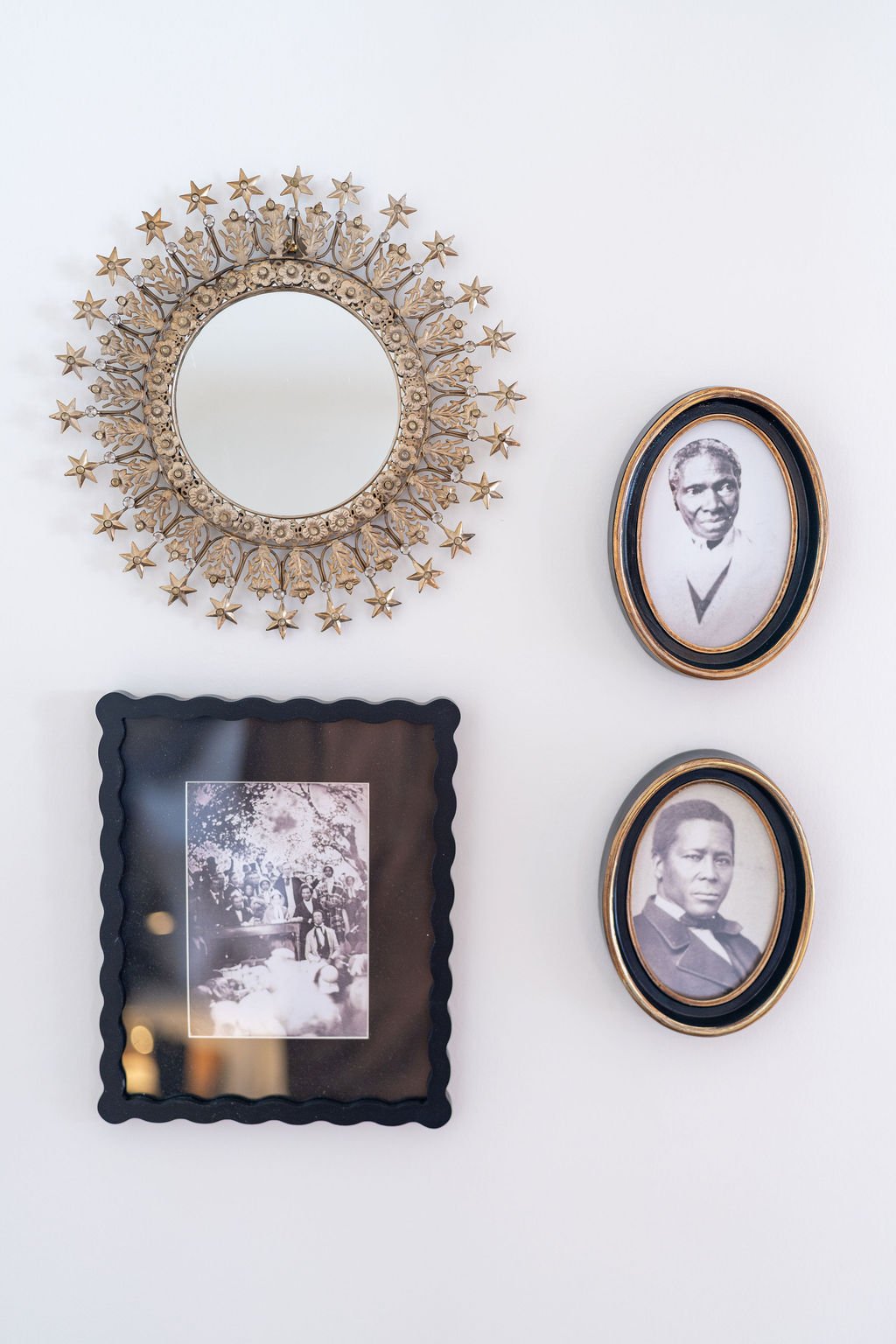
On a cold night in the 1850s, freedom seekers slipped north from Wilmington, Delaware, passing through Thomas Garrett’s home and business, where his quiet courage offered sanctuary in the final slave state. Garrett wasn’t the herald of freedom, but an essential stop on the path ahead.
The true safe lights glowed a few miles north, throughout the Kennett region of southern Chester County. Here, fields, farmhouses, and meetinghouses formed a deliberate corridor of refuge. Active Black abolitionists (like Levi and Harriet Hood and James H. Walker) and white Quaker abolitionists (such as Isaac and Dinah Mendenhall and Eusebius Barnard) maintained critical hiding places and routes. Although we lack solid proof of deep interracial collaboration, both groups were profoundly active in their own spheres. Notably, Harriet Hood served on a Quaker committee at the Longwood Progressive Friends Meeting House that helped raise funds for the Pennsylvania Abolition Society, providing a rare point of interracial engagement.
Longwood Progressive Friends Meeting House (est. 1855) served as a moral and logistical hub. Abolitionist reformers like Frederick Douglass, Harriet Tubman, Sojourner Truth, Susan B. Anthony, and Lucretia Mott spoke there, electrifying local efforts. Fugitive paths stretched northward from Kennett: east to Philadelphia, where William Still—the free Black conductor and historian—preserved individual names and stories; and north through Lancaster and Columbia, moving toward New York or Canada.
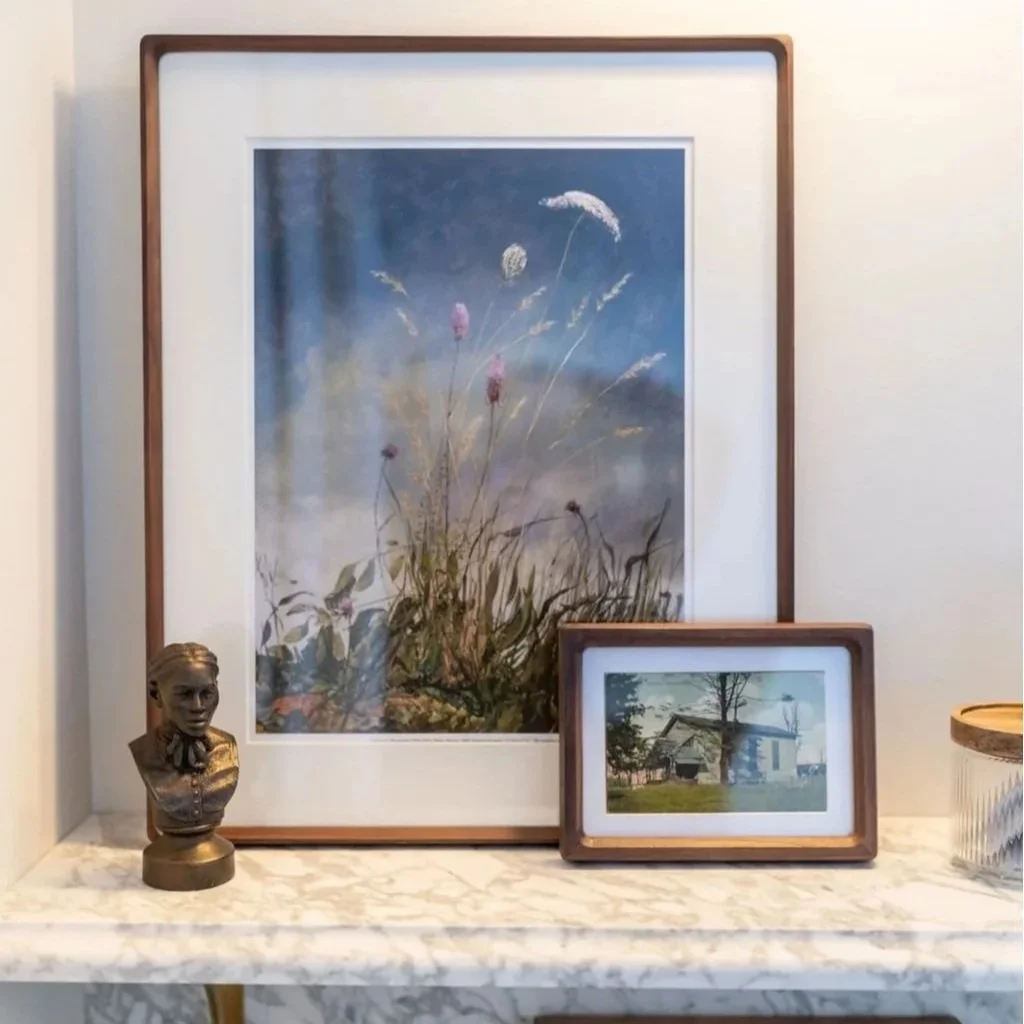
The system was organic and emergent, a grassroots effort driven by individuals and communities. Yet it became one of the most organized, well-traveled routes in the Underground Railroad. The Kennett region was the quiet heartbeat of that path to liberty.
The Abolitionist guest room recalls the resilience, strength, and sacred passage of the Underground Railroad. Earthy shades of umber and bronze meet ivory and indigo, like secret letters carried under starlight. Within its quiet, soulful spirit lies a sanctuary of reflection, where a subtle reminder of past bravery creates a present sense of freedom.