
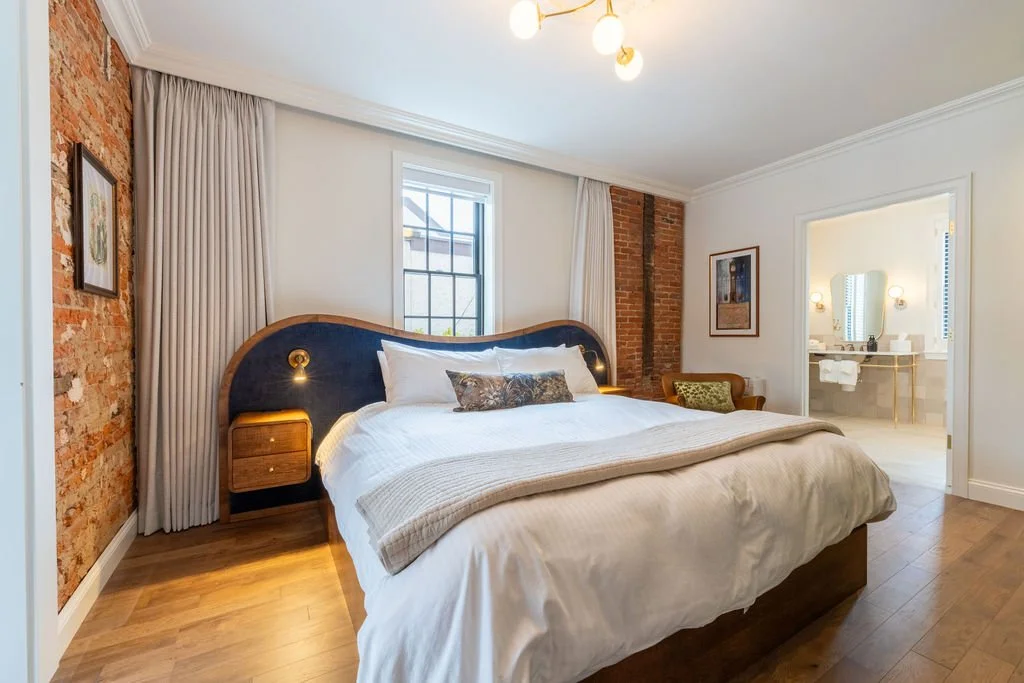
The Watchmaker
In the Watchmaker suite, the air feels slower, as if the ticking of a long-forgotten clock still lingers in the walls. This was once the home of Thomas Milhous, a quiet craftsman whose hands kept the hours of Kennett Square in the mid-1800s. Yet the story of this place stretches back further, to a county where time itself was once measured in wood, brass, and firelight.
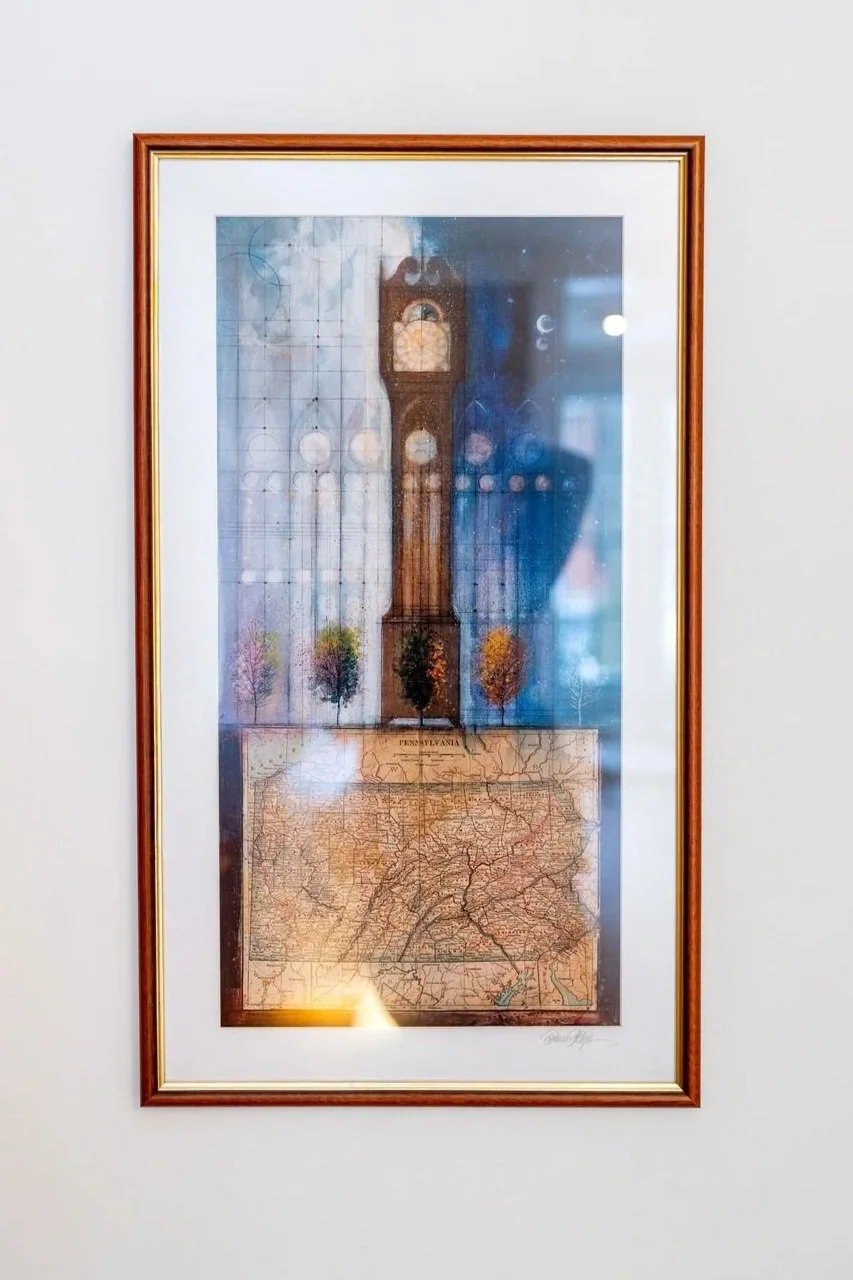
In the early 1700s, Chester County was alive with artisans who shaped not only tools and furniture but the very rhythm of daily life. Among them, clockmakers worked through the long winters, building tall clocks that loomed like sentinels in farmhouse halls. These were no simple machines—they were cathedrals of precision, each case carved by cabinetmakers, each dial adorned by silversmiths, each gear and wheel cut with infinite care. The Jackson family of New Garden became legends of this craft, with Isaac Jackson’s austere designs embodying the Quaker ideal: modest, functional, enduring.
Into this lineage stepped Milhous. Apprenticed to Ziba Ferris, a Wilmington silversmith and watchmaker, he learned his trade in a shop alive with the clatter of tools. By the time Milhous settled in this house, his work was less about creation and more about preservation: repairing, tending, and coaxing life back into fragile mechanisms. Though no clock bears his name, the steady hands of Thomas Milhous once turned here.
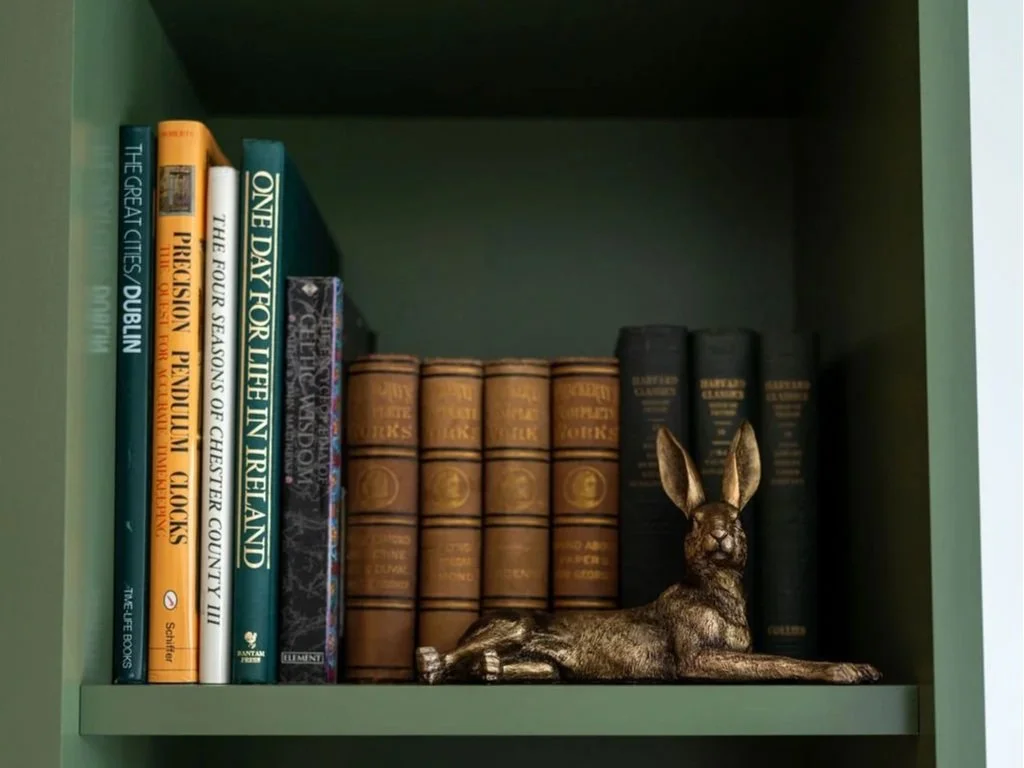
The Watchmaker suite remembers him and all who measured time in this place. Its velvet shadows, aged brass accents, and concentric motifs suggest both the machinery of clocks and the mystery of time itself. Rabbit motifs slip quietly into view, like fleeting seconds or twilight’s threshold. More than a room, it is a threshold into where the pulse of history ticks just beneath the silence, and time feels less like a measure than a haunting presence.